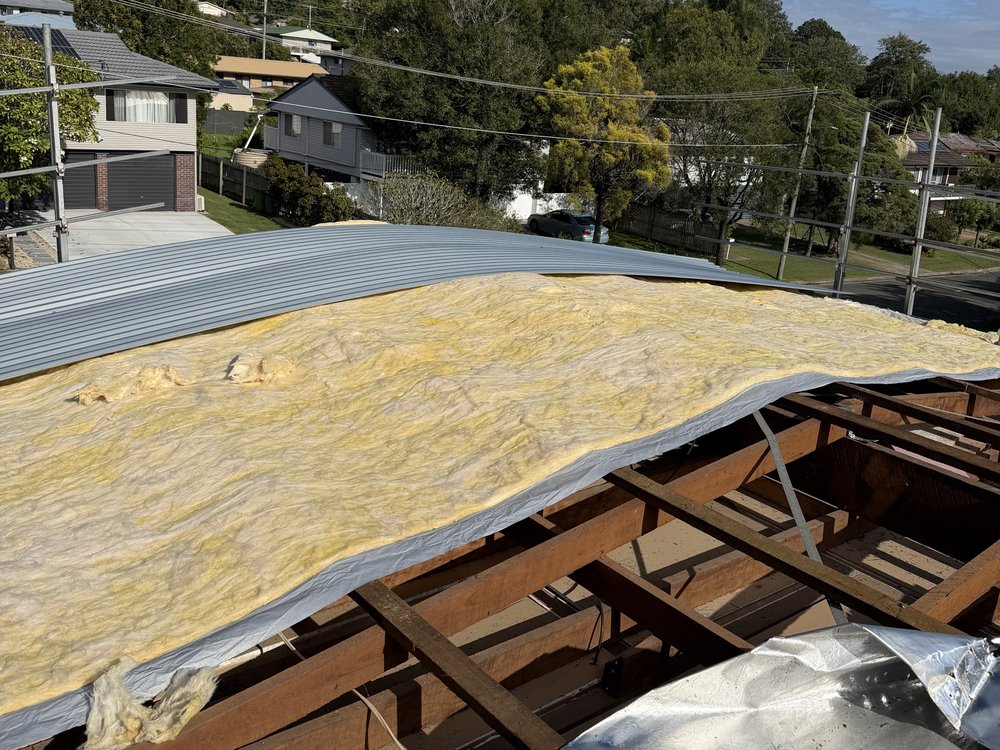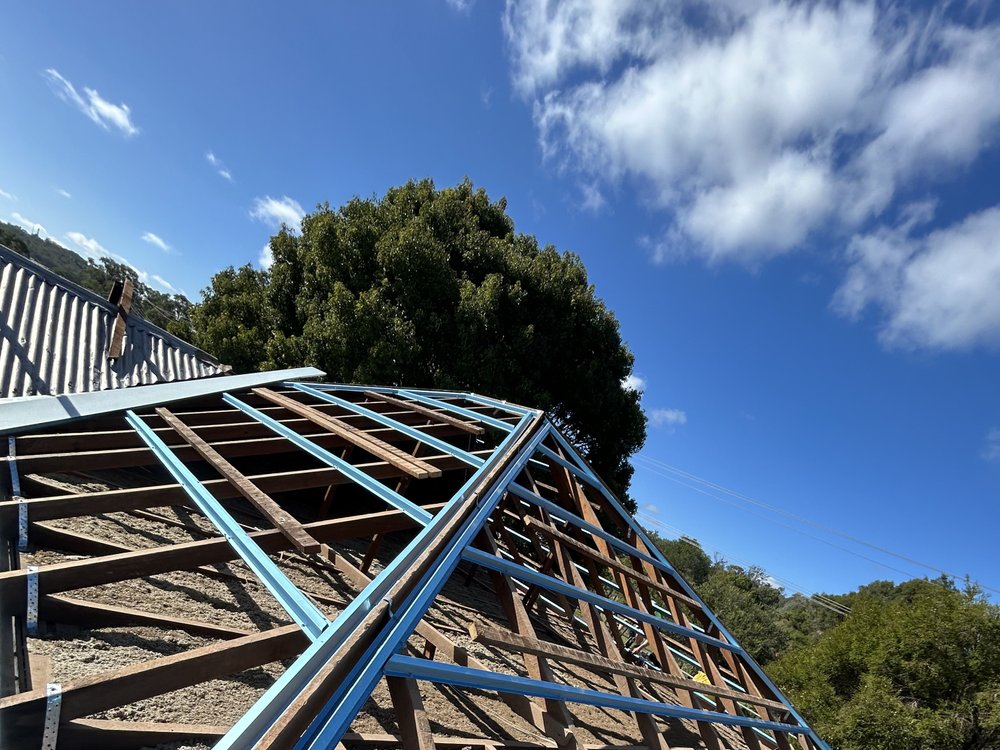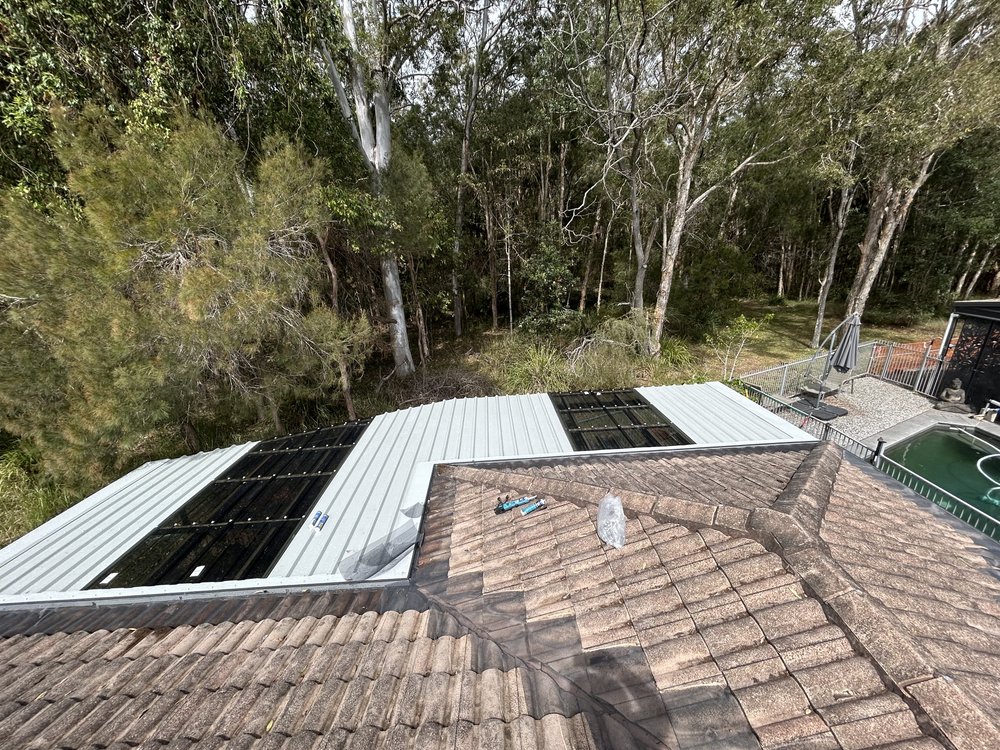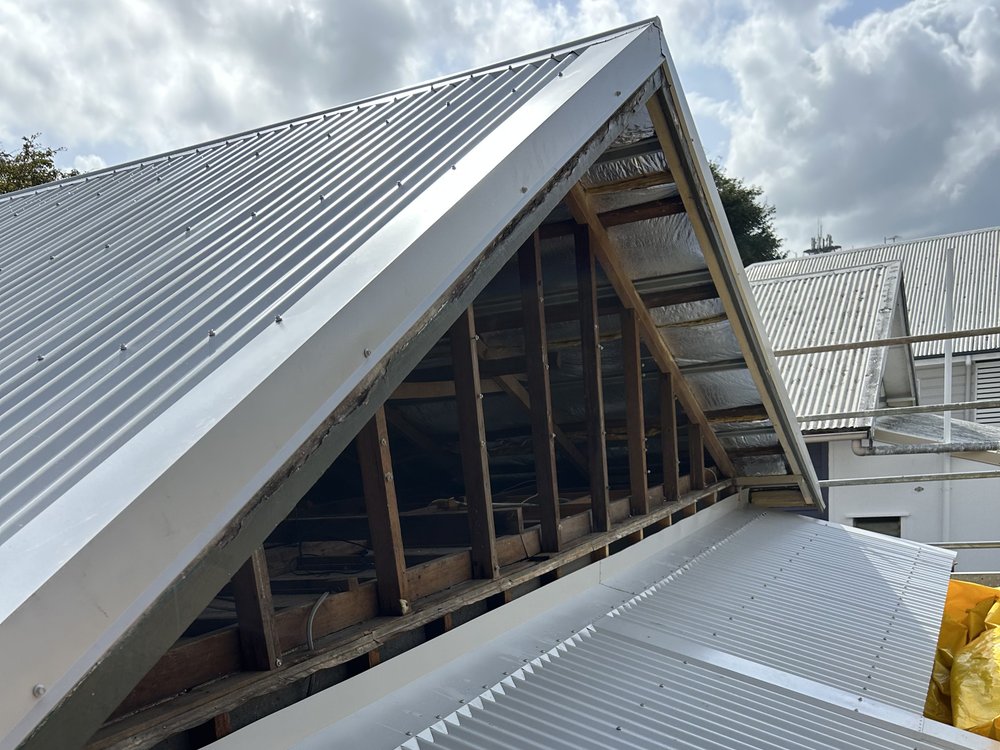
Some roofing jobs are won or lost in the small details. This Capalaba project is a good example, and it comes from the team at Detail Roofing, a crew of roofers Brisbane homeowners can call on for exactly this kind of careful work. The hero photo catches the job part-way through, and it shows two details that matter a great deal to how a roof performs over time: the apron flashing where a lower roof meets a wall, and the barge cappings along the sloping edges of the upper roof.
A job photographed mid-build
It is worth being upfront about what the photo shows. The upper gable wall is still open, so this is a work-in-progress installation rather than a finished, fully waterproofed roof junction. We think that makes it more useful as a case study. It shows the structure of the roof and the order in which the weatherproofing details come together, instead of a polished final shot that hides how the work is done.
Detail work from roofers Brisbane homeowners can trust
Two parts of this job deserve a closer look.
Apron flashings at the lower roof and wall junction
Where a lower roof meets a wall or an adjoining structure, water has an easy path into the building if the junction is not handled properly. Apron flashings are there to stop rainwater getting into that junction.
They only work when they are installed correctly. That means:
- Adequate overlaps so water cannot be driven or tracked behind the flashing
- Appropriate weatherproofing details at the junction
- Correct installation from start to finish, because a flashing that is almost right is still a potential leak
Barge cappings along the upper roof edges
The sloping edges of the upper roof are exposed to the weather. Barge cappings protect those vulnerable edges and help stop wind-driven rain from getting in beneath the roof sheets. They also give the roof a neat, finished appearance.
Why junctions need extra attention
Areas where different roof sections meet are among the most vulnerable parts of any roof. If they are built incorrectly, water ingress is a real risk. Good flashing design has to account for:
- Roof pitch
- Water flow across the roof surface
- Wind-driven rain, which can push water sideways and upwards
The goal is always to direct water safely onto the roof surface and away from the junction, rather than hoping the junction will cope.
What this job shows
This Capalaba job is a reminder that a roof is only as good as its weakest junction. Sheets, flashings and cappings all have to work together. When the lower roof, the wall and the upper roof edges are detailed properly, the roof is far better placed to keep the weather out for the long term.
If you have a roof with junctions, gables or wall connections you want done properly, talk to the team at Detail Roofing. You can start with our roofers in Brisbane page and get in touch to discuss your job directly with us.